
How to Tell If a Tree on Your Property Is Hazardous
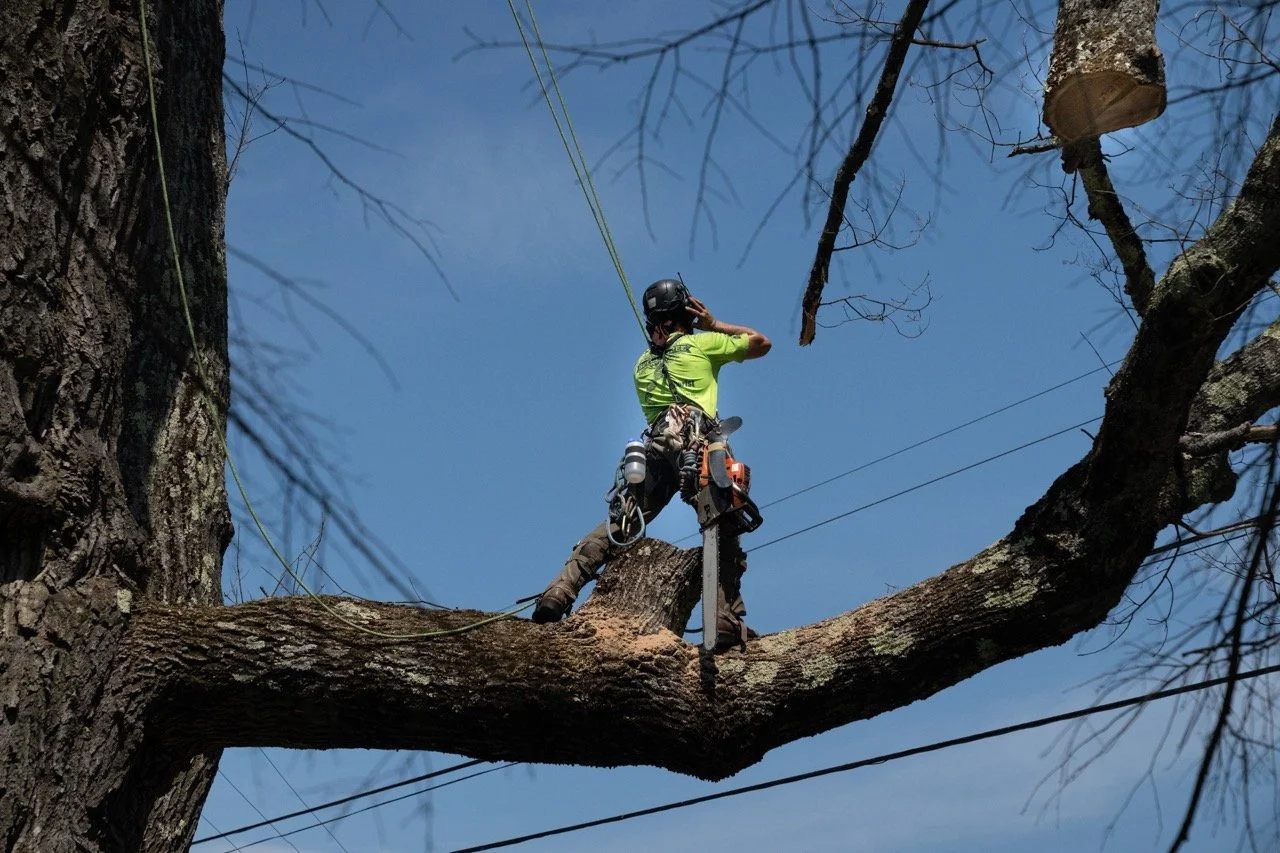
Trees are one of the most valuable parts of any property. They provide shade, privacy, beauty, and wildlife habitat. But when a tree becomes compromised, it can quickly go from asset to liability.
The challenge is that hazardous trees aren't always obvious.
Some trees fail dramatically after a storm, while others quietly decline for years before a branch breaks or the entire tree comes down unexpectedly. Knowing what to look for can help property owners address problems before they become emergencies.
Dead or Dying Branches
One of the easiest warning signs to spot is deadwood.
Large dead limbs hanging over homes, driveways, roads, or gathering areas can pose a significant risk. Dead branches are more likely to fail during high winds, snow loads, or even on calm days as decay progresses.
If you notice large branches without leaves during the growing season or branches with peeling bark and visible decay, it may be time for a closer inspection.
Cracks and Structural Defects
Trees naturally develop imperfections over time, but certain defects can indicate a higher risk of failure.
Look for:
Large cracks in the trunk
Deep splits where major limbs attach
Multiple trunks with weak connections
Cavities or hollow sections
Areas of visible decay
Not every crack means a tree needs removal, but structural defects should always be evaluated by a qualified arborist.
Leaning Trees
A tree that has always leaned slightly may not be a concern.
A tree that has recently started leaning is a different story.
Sudden changes in a tree's angle can indicate root failure, soil movement, storm damage, or internal decay. If a tree appears to be shifting toward a structure, roadway, or utility line, it should be assessed immediately.
Root Problems Often Go Unnoticed
Many tree failures begin below ground.
Construction activity, soil compaction, erosion, flooding, and disease can all damage a tree's root system. Unfortunately, homeowners often don't see these problems until symptoms begin appearing in the canopy.
Signs of root issues can include:
Thinning foliage
Premature leaf drop
Mushrooms near the base
Soil lifting around roots
Sudden leaning
Healthy roots are essential for stability. When they become compromised, even an otherwise healthy-looking tree can become hazardous.
Storm Damage Doesn't Always Show Up Right Away
Here in Maine, trees are constantly dealing with wind, snow, ice, and heavy rain.
After a storm, some damage is immediately obvious. Other times, trees sustain hidden injuries that weaken them over months or years.
Broken limbs, torn bark, and damaged branch unions can create entry points for decay and disease. That's why post-storm inspections are often a good investment, especially for large trees near homes and high-use areas.
When to Call an Arborist
If you're unsure whether a tree poses a risk, it's worth having it evaluated.
A professional arborist can assess:
Tree health
Structural integrity
Root stability
Potential targets
Long-term management options
In many cases, pruning can reduce risk and preserve the tree. In others, removal may be the safest solution.
The Goal Isn't Always Removal
One of the biggest misconceptions in tree care is that every problem tree needs to come down.
In reality, many trees can be safely managed through pruning, cabling, bracing, or proactive care. The goal is to understand the risk and make informed decisions before problems develop.
At Hutch’s, we believe good tree care starts with understanding what's happening beneath the bark. Whether a tree needs attention, treatment, or removal, taking action early often leads to better outcomes for both the tree and the property.