
Shoreland Tree Work: What’s Allowed in Maine (And What’s Not)
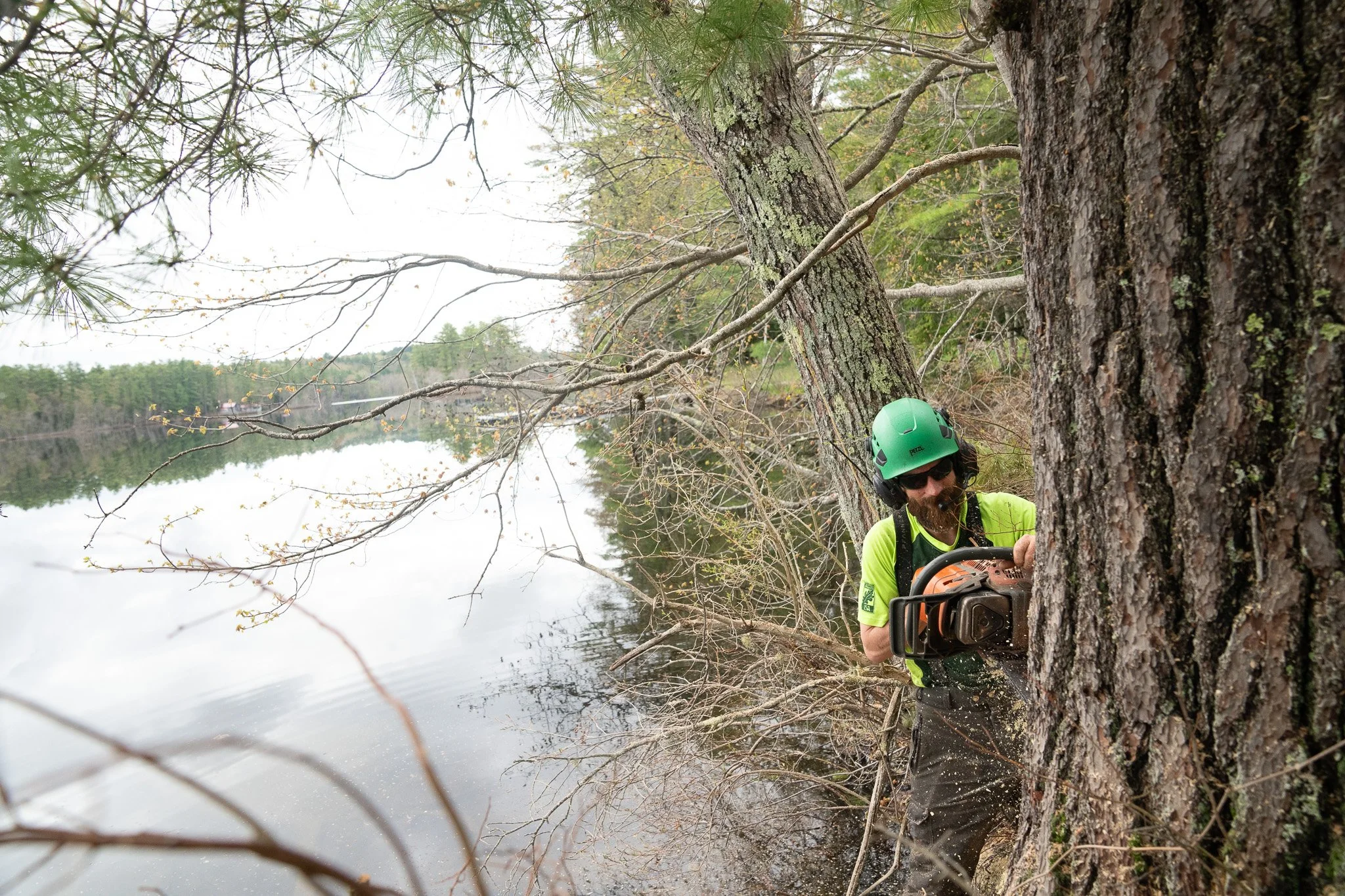
If you own property on a lake, pond, river, or other protected waterbody in Maine, you may already know that there are additional rules surrounding what you can do with the land near the water.
Those rules don't just apply to building and construction. Tree cutting, vegetation removal, view clearing, and landscaping can all be subject to shoreland zoning requirements.
For homeowners, this can make seemingly simple projects surprisingly complicated. Can you remove that dead tree? Can you open up your lake view? Can you clear brush along the shoreline? What about pruning a few trees?
The answer is often: it depends.
Maine's Mandatory Shoreland Zoning Act establishes statewide minimum standards, but municipalities administer their own shoreland zoning ordinances and may adopt requirements that are more restrictive than the state minimums.
That's why understanding the rules before starting tree work is so important.
What Is the Shoreland Zone?
Maine's shoreland zone generally includes land within:
250 feet of the normal high-water line of a great pond or river flowing to a great pond
250 feet of the upland edge of a coastal wetland
250 feet of the upland edge of certain freshwater wetlands
75 feet of the normal high-water line of certain streams
That doesn't mean the exact same tree-cutting restrictions apply everywhere within those distances. Different portions of the shoreland zone have different requirements, and local ordinances can add additional restrictions.
For that reason, it's important to know not only that your property is in the shoreland zone, but which rules apply to the specific area where you want to work.
The 75- and 100-Foot Buffer Matters
One of the most important concepts for homeowners is the vegetation buffer closest to the water.
Under Maine's minimum standards, restrictions on vegetation clearing apply particularly strongly within the first 75 feet from the normal high-water line or upland edge of a wetland. For great ponds and rivers flowing to great ponds, this buffer extends to 100 feet.
Within these areas, homeowners generally cannot simply clear the forest to create an open lawn or unobstructed view.
A well-distributed stand of trees and other vegetation must remain, and cleared openings are generally limited to 250 square feet under the applicable standards.
That vegetation serves an important purpose.
Trees, shrubs, and other plants help stabilize soil, reduce erosion, filter runoff, provide wildlife habitat, and protect the health of the waterbody.
In other words, the trees between your property and the water aren't just scenery, they're part of the lake's natural infrastructure.
How Much Can You Cut?
This is where things can get particularly confusing.
Under Maine's general shoreland vegetation standards, selective cutting may allow removal of up to 40% of the volume of trees four inches or more in diameter during a 10-year period, provided that a well-distributed stand of trees and other vegetation remains.
That does not mean a homeowner can simply remove 40% of the trees closest to the water. The regulations use specific methods for determining whether enough vegetation remains, including a point-system approach within the buffer area. And importantly, your town may have stricter requirements.
So if you're thinking about opening up a lake view, creating a larger clearing, or removing a significant number of trees, don't assume that the 40% figure automatically gives you permission to do so.
Can You Remove a Dangerous Tree?
Potentially, yes, but again, the circumstances matter.
Safety hazards can be treated differently from ordinary vegetation clearing, and specific shoreland zoning provisions may apply depending on the waterbody, zoning district, and municipality.
This is one reason we recommend having questionable trees evaluated before simply scheduling their removal.
A professional assessment can help determine:
Whether the tree actually presents a hazard
Whether pruning could address the problem
Whether removal is necessary
Where the tree is located within the shoreland zone
Whether additional municipal approval may be required
How the work can be performed while minimizing disturbance
The goal is to solve the problem without accidentally creating a different one.
What About Creating a Lake View?
This is one of the most common questions we hear.
Maybe you've bought a beautiful lakefront property, but the shoreline is screened by trees. You'd love to see more water from the house, deck, or yard. That doesn't necessarily mean you can clear a straight corridor to the lake.
View enhancement in the shoreland zone often requires a much more thoughtful approach. Selective pruning and removal may be possible, but the work needs to account for the required vegetation buffer and the character of the remaining forest.
The best lake views aren't necessarily created by removing everything between the house and the water. Often, the better approach is to selectively remove or prune certain trees while preserving enough vegetation to maintain a healthy, natural shoreline.
Why Shoreland Trees Are Worth Preserving
There is a good reason Maine places additional protections on vegetation near the water.
A healthy shoreline buffer can:
Reduce erosion
Slow stormwater runoff
Filter nutrients and pollutants before they reach the water
Provide wildlife habitat
Protect fish and aquatic ecosystems
Stabilize the shoreline
Maintain privacy and natural beauty
Removing too much vegetation can expose soil, increase runoff, and change the way water moves across a property. A beautiful lake view isn't much help if achieving it creates erosion problems or negatively impacts the shoreline.
That's why responsible shoreland tree work is about balancing access, views, safety, aesthetics, and environmental protection.
Local Rules Matter
This is perhaps the most important takeaway from this entire article:
Maine's shoreland zoning rules are not simply a one-size-fits-all checklist.
Municipalities are responsible for administering shoreland zoning, and local ordinances can be more restrictive than the state's minimum requirements. That means the rules in Bridgton may not be identical to the rules in another Maine lake community.
Before beginning significant tree work near the water, homeowners should check with their town's code enforcement or planning office to understand the applicable ordinance and whether approval is required.
The Maine Department of Environmental Protection also maintains resources on shoreland zoning and vegetation clearing.
How Hutch’s Tree Approaches Shoreland Work
Working around Maine's lakes and mountains is one of the best parts of what we do. It also comes with a responsibility to respect the landscape we're working in.
When we're evaluating trees near the water, we look beyond the individual tree. We consider the surrounding forest, the shoreline, the terrain, access, the client's goals, and the long-term health of the property.
Sometimes the right answer is removal. Sometimes it's pruning. Sometimes it's leaving a tree exactly where it is. And sometimes a carefully planned combination of selective cutting and pruning can dramatically improve a property without compromising the shoreline.
Good shoreland tree work isn't about seeing how much you can remove. It's about understanding what should be removed—and what should stay.
If you're considering tree work on a lakefront or waterfront property in Western Maine, it's worth getting professional advice before you start cutting.
A little planning up front can help you avoid costly mistakes, protect your shoreline, and make sure the finished result is something you can enjoy for years to come.