
Summer Thunderstorms in Western Maine: Is Your Property Ready?
When most people think about tree damage in Maine, they picture winter ice storms or heavy snow. But some of the most destructive weather for trees actually arrives during the warmer months.
Throughout late spring and summer, Western Maine can experience powerful thunderstorms capable of producing strong wind gusts, torrential rain, lightning, and sudden downbursts. These storms often arrive with little warning and can turn a seemingly healthy tree into a major hazard in a matter of minutes.
Understanding how thunderstorms affect trees can help property owners reduce risk before the next storm rolls through.
Why Summer Thunderstorms Cause Tree Damage
Unlike winter weather, thunderstorms place sudden stress on trees.
Strong wind gusts can:
Snap large limbs
Split trunks at weak branch unions
Uproot trees with compromised root systems
Cause entire trees to fail unexpectedly
Heavy rainfall can also saturate the soil, reducing root stability and making trees more susceptible to blowing over during high winds.
Many storm-damaged trees already had underlying issues that simply weren't obvious until severe weather exposed them.
Common Warning Signs Before a Storm
Not every tree that fails during a thunderstorm is unhealthy, but many show warning signs beforehand.
Property owners should watch for:
Dead or hanging branches
Large cracks in the trunk
Multiple stems with narrow attachments
Cavities or signs of decay
Leaning trees
Exposed or damaged roots
Significant dieback in the canopy
Identifying these issues before storm season can dramatically reduce the likelihood of property damage.
Trees Most Vulnerable to Storm Damage
While any tree can fail under extreme conditions, certain factors increase risk.
Trees may be more vulnerable if they:
Have extensive decay
Were topped or improperly pruned in the past
Have dense, unbalanced canopies
Are growing in compacted or poorly drained soils
Sustained previous storm damage
Even mature trees that have stood for decades can become hazardous if structural issues go unaddressed.
Preventative Tree Care Before Storm Season
The best time to prepare for a thunderstorm is before one is in the forecast.
Preventative maintenance may include:
Removing dead, damaged, or weak limbs
Reducing weight on overextended branches
Improving canopy structure through professional pruning
Evaluating trees near homes, garages, driveways, and power lines
Monitoring trees that have experienced previous storm damage
Proactive tree care not only improves safety but often extends the lifespan of valuable mature trees.
What To Do After a Thunderstorm
After severe weather passes, it's important to inspect your property carefully.
Look for:
Broken or hanging limbs
Fresh cracks in trunks or major branches
Trees that have shifted or begun leaning
Root plate movement or lifted soil
Branches resting on structures or utility lines
Never attempt to remove storm-damaged limbs that are suspended overhead or entangled in power lines. These situations can be extremely dangerous and should be handled by trained professionals.
How Hutch’s Tree Can Help
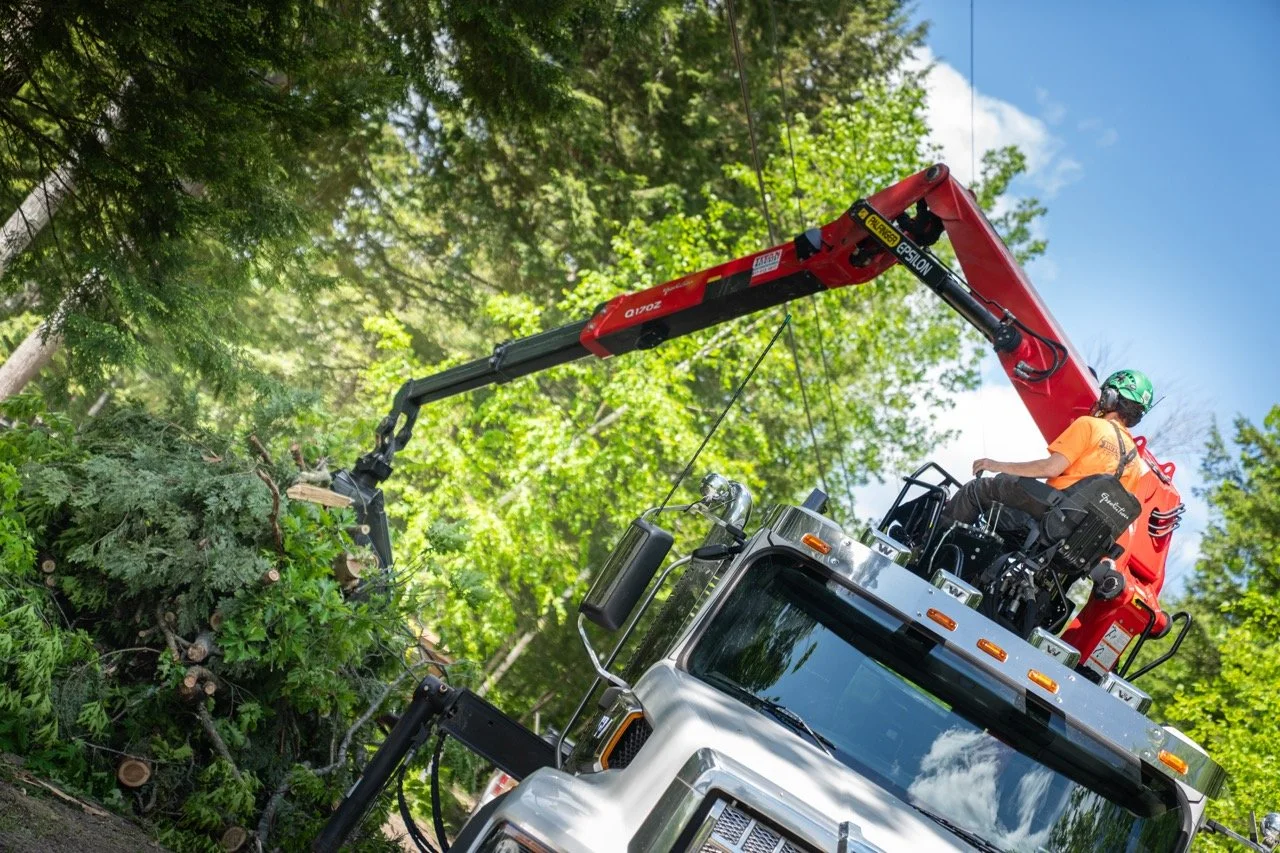
At Hutch’s Tree, we regularly assist homeowners throughout Western Maine with storm preparation, hazard assessments, pruning, and storm-damage cleanup.
Whether you're concerned about a large tree near your home or want peace of mind before thunderstorm season arrives, a professional evaluation can identify potential issues before they become costly emergencies.
The strongest storms can't be prevented, but many tree failures can.