
When Should a Tree Be Removed vs Pruned?
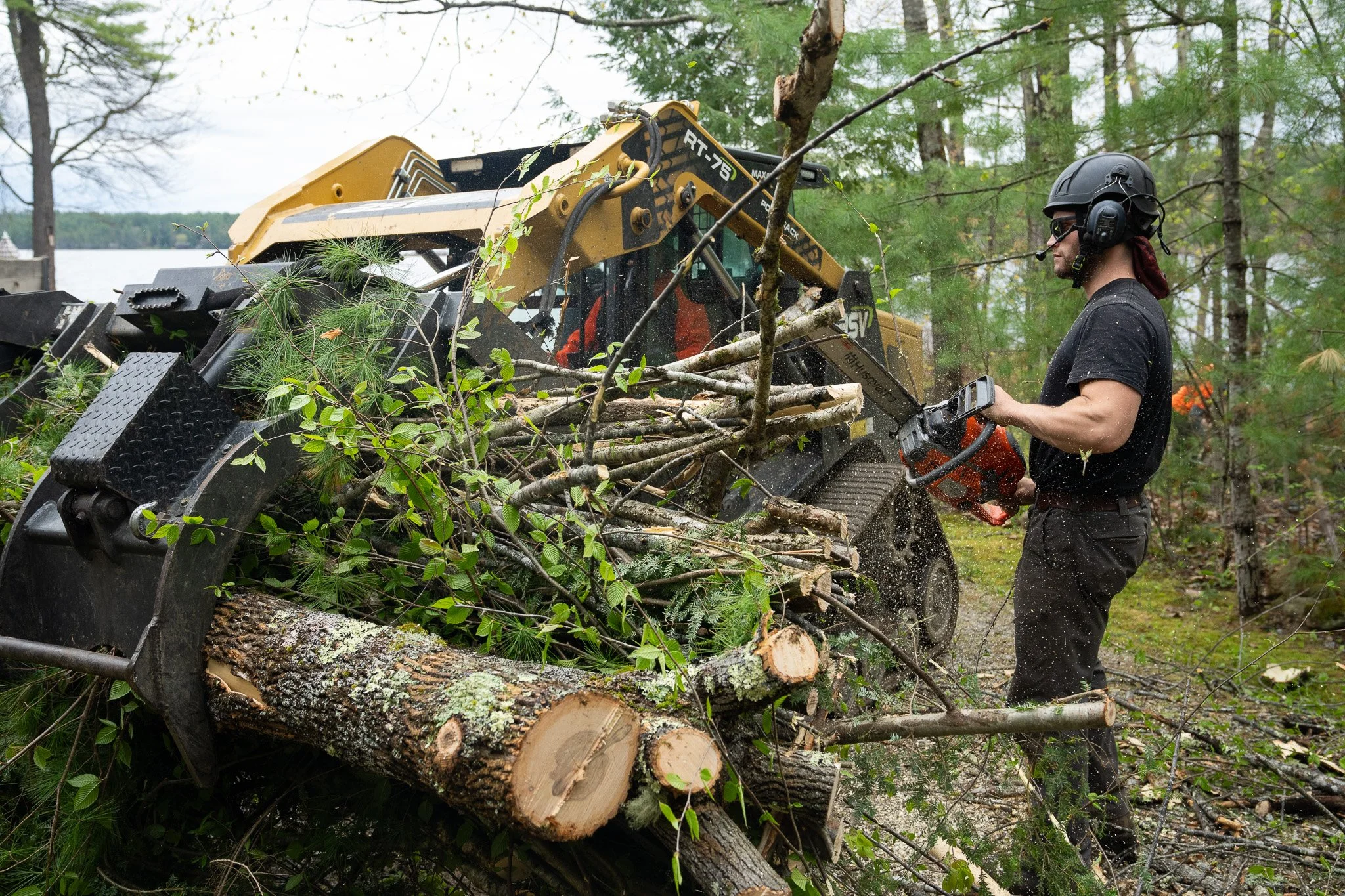
It’s one of the most common, and most important, decisions a property owner can make: do you remove a tree, or do you work to preserve it?
In many cases, pruning is the right place to start.
Selective pruning can dramatically improve a tree’s health, structure, and safety. By removing dead or weakened limbs, reducing weight in key areas, and improving overall balance, pruning helps trees withstand environmental stress—especially in storm-heavy regions like Maine.
It also allows you to maintain the character of your landscape without unnecessary loss.
But there are limits to what pruning can accomplish.
When a tree shows significant structural damage, large cracks, major decay, or compromised root systems, removal becomes the safer option. The same is true for trees that are leaning heavily, growing too close to structures, or interfering with power lines.
Disease is another deciding factor.
Some issues can be managed, but others spread quickly or weaken the tree beyond recovery. In these cases, removal isn’t just about the individual tree, it’s about protecting the surrounding environment.
There’s also a long-term perspective to consider.
Sometimes a tree can be pruned to buy time, but its overall trajectory is clear. Planning for eventual removal, on your timeline, under controlled conditions, is often preferable to waiting for failure.
At its core, the decision comes down to three things: safety, health, and location.
The Hutch’s approach is simple: preserve when it makes sense, remove when it’s necessary, and always think a step ahead. Trees are part of a larger system, and the goal is to care for that system responsibly, not just react to it.