
Arborjet Tree Injections: What They Are and When They Work
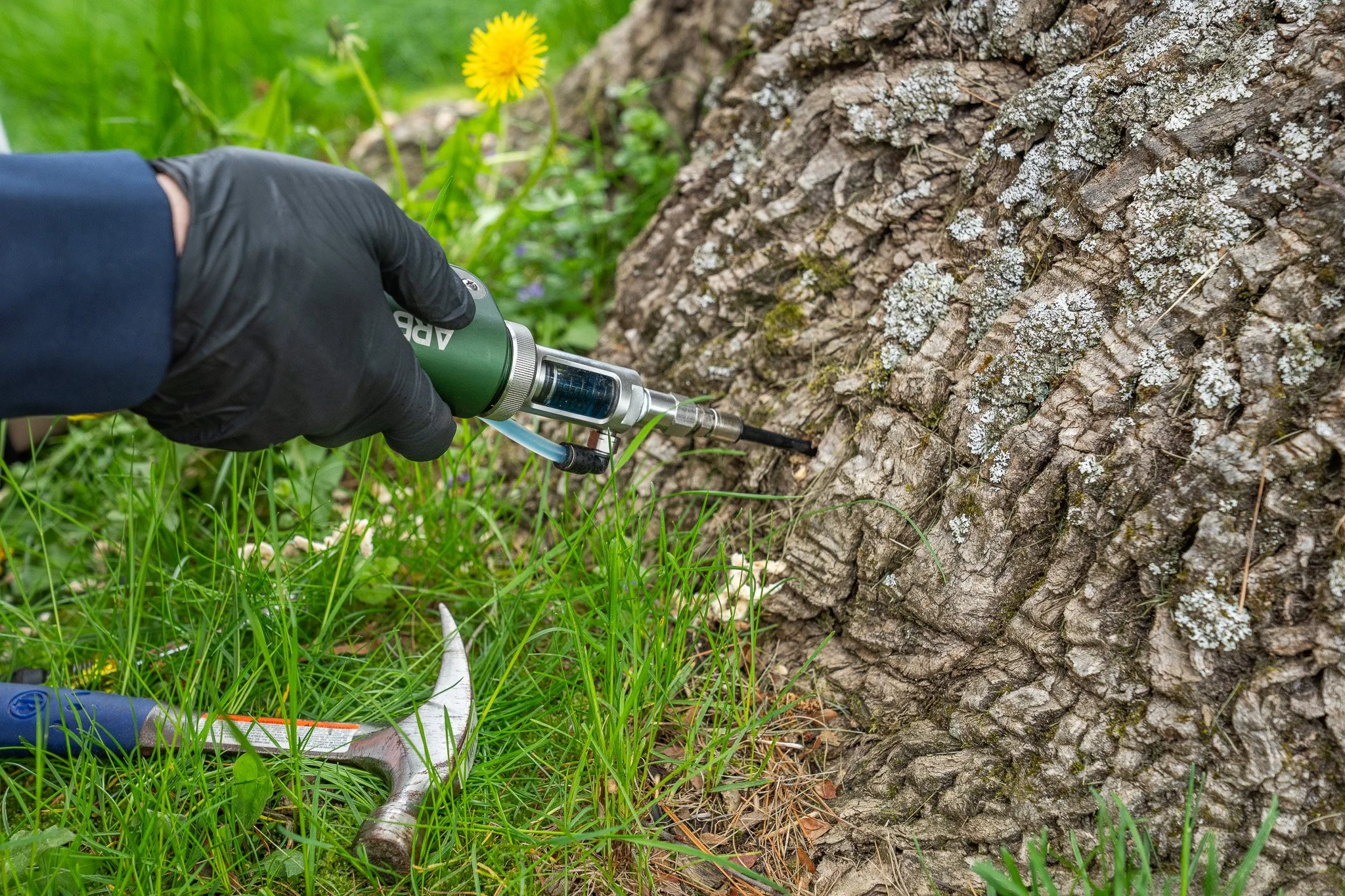
When people think about tree care, they often think about pruning or tree removal. But in some situations, trees can actually be treated and protected before decline becomes irreversible.
One of the tools arborists use for this is systemic tree injections, including treatments through systems like Arborjet.
For valuable trees facing insect or disease pressure, these treatments can sometimes make the difference between preserving a mature tree and losing it entirely.
What Are Tree Injections?
Tree injections work by delivering treatment directly into a tree’s vascular system.
Rather than spraying chemicals broadly across a property, the treatment moves internally through the tree itself. This allows targeted protection while reducing drift and environmental exposure.
Arborjet systems are commonly used for:
Insect management
Disease management
Nutrient deficiencies
Stress reduction treatments
Emerald Ash Borer and Ash Tree Protection
One of the most common uses for tree injections right now in Maine involves the Emerald Ash Borer.
Emerald Ash Borer attacks ash trees from the inside out, feeding beneath the bark and disrupting the tree’s ability to transport nutrients and water.
Without treatment, most untreated ash trees eventually decline and die.
Injections can help protect:
Healthy ash trees
Moderately affected ash trees
High-value shade trees
Important landscape trees
But timing matters tremendously.
Early Intervention Is Critical
One of the biggest misconceptions about tree injections is that severely declining trees can simply be “saved.”
Unfortunately, once a tree has lost too much canopy or structural integrity, treatment may no longer be effective.
The best candidates for injections are trees that:
Still have a relatively healthy canopy
Show early signs of infestation
Hold significant landscape or shade value
Are structurally sound
The earlier treatment begins, the better the chances of success.
Not Every Tree Should Be Treated
In some situations, removal is the safer and more practical option.
Factors that may influence that decision include:
Severe structural decline
Extensive dead canopy
Advanced infestation
High risk near homes or roads
Cost compared to long-term value
A good arborist helps homeowners make realistic, informed decisions rather than automatically recommending treatment or removal.
Tree Preservation Matters
Large mature trees provide enormous value to properties and ecosystems.
They:
Create shade
Reduce erosion
Improve property value
Support wildlife
Shape the character of the landscape
When preservation is possible, treatments like Arborjet injections can play an important role in protecting those trees for the future.
At Hutch’s Tree Service, we believe thoughtful tree care means evaluating every situation carefully and finding the best long-term approach for both the property and the surrounding environment.