
Why Shoreland Tree Care Requires an Arborist
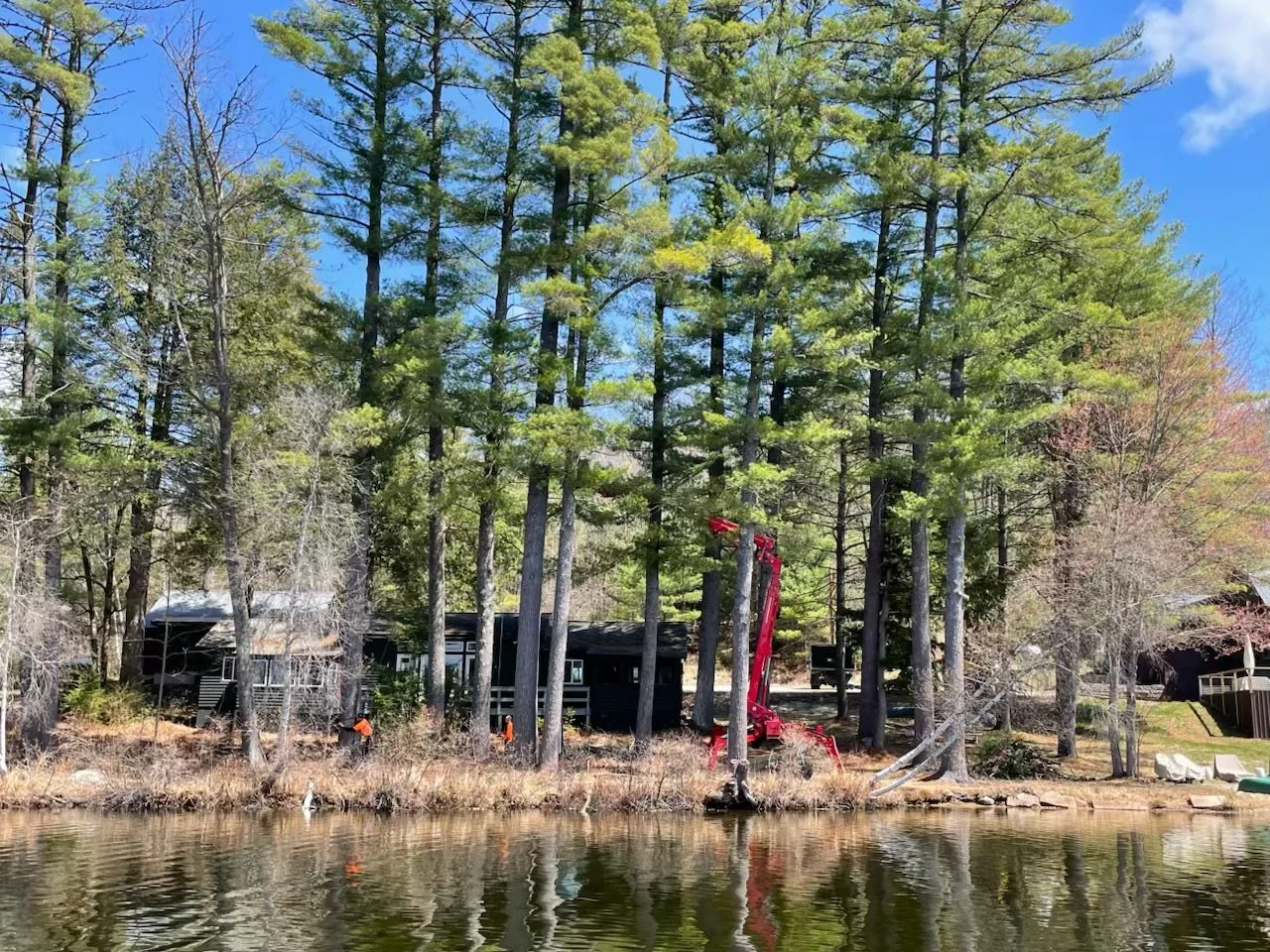
Tree work near lakes, ponds, and shorelines is very different from standard tree removal.
Throughout Western Maine, waterfront properties around places like Kezar Lake, Moose Pond, Long Lake, and Highland Lake often involve a combination of environmental sensitivity, erosion concerns, difficult access, and Maine shoreland zoning regulations.
That’s why shoreline tree care requires careful planning and experienced arborist oversight.
Trees Play a Major Role Along Shorelines
Shoreline trees do far more than provide shade and privacy.
Their root systems help:
Stabilize banks
Reduce erosion
Filter runoff
Protect water quality
Provide wildlife habitat
Reduce stormwater impact
Removing too many trees too quickly can destabilize shorelines and create long-term environmental issues.
That’s why thoughtful, selective management is so important.
Maine Shoreland Regulations Matter
Many lakefront properties in Maine fall within regulated shoreland zones.
Depending on the location and municipality, there may be restrictions involving:
Tree removal limits
Clearing percentages
Hazard tree documentation
Replanting requirements
Buffer zones
Every property is different, and understanding those regulations is an important part of responsible shoreline work.
Shoreline Trees Often Present Unique Risks
Trees growing near water experience very different conditions than inland trees.
Common issues include:
Shallow root systems
Wind exposure
Wet or unstable soils
Ice damage
Beaver activity
Leaning stems
Erosion-related instability
In many cases, trees can appear healthy while still having compromised root support.
Precision Matters Near Homes and Water
Waterfront properties also tend to have:
Limited equipment access
Septic systems
Drainage structures
Gardens and landscaping
Docks and structures
Tight working spaces
That means removals often require:
Technical climbing
Rigging systems
Piece-by-piece dismantling
Careful debris management
Protecting the property and minimizing impact is just as important as removing the tree itself.
The Goal Is Balance
Good shoreland tree care is rarely about clear-cutting views or removing large sections of forest.
The goal is balance:
Maintaining safety
Preserving healthy trees
Protecting water quality
Improving views responsibly
Reducing long-term risk
At Hutch’s Tree Service, we approach shoreline work with a strong focus on stewardship, careful planning, and respect for both the property and the surrounding environment.
Because healthy shorelines depend on healthy forests.