
Emerald Ash Borer in Maine: What Homeowners Need to Know
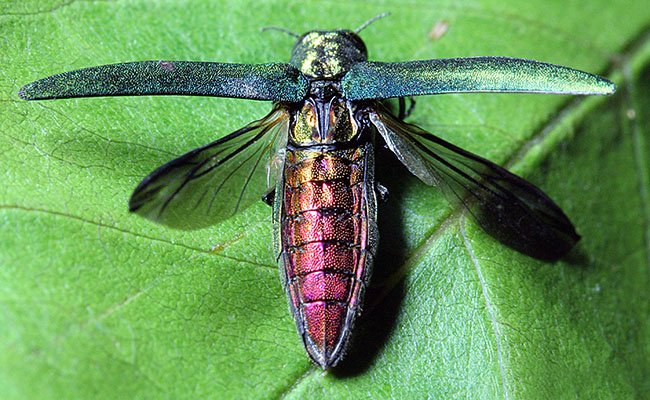
Source: Wikipedia
If you have ash trees on your property in Western Maine, there’s one insect you should know about: the Emerald Ash Borer (EAB).
This invasive beetle has caused widespread ash tree decline across the country — and Maine is no exception. Once EAB infests an ash tree, the damage progresses quickly. Understanding what it is, how it spreads, and what your options are can make a major difference for your property.
What Is Emerald Ash Borer?
Emerald Ash Borer is a small, metallic green beetle that attacks ash trees. While the adult beetles are visible during the summer months, the real damage happens beneath the bark.
EAB larvae feed on the inner layer of the tree, disrupting the flow of water and nutrients. Over time, this essentially starves the tree from the inside out.
Without intervention, most infested ash trees die.
Signs Your Ash Tree May Be Affected
In Western Maine, we’re seeing increased ash decline in both residential and wooded properties. Some common warning signs include:
Thinning canopy or dieback at the top of the tree
Bark splitting
D-shaped exit holes in the bark
Increased woodpecker activity
Epicormic sprouts (new shoots growing from the trunk)
By the time visible symptoms appear, infestation is often already well underway.
Can Ash Trees Be Saved?
In certain cases — yes.
Healthy or lightly infested ash trees can sometimes be protected using professional trunk injections. These treatments help control the larvae and protect the vascular system of the tree.
However, treatment only makes sense when:
The tree is structurally sound
The canopy is still largely intact
The tree has significant value (shade, aesthetics, privacy, etc.)
Severely declining trees are typically beyond saving and should be removed for safety reasons.
Why Winter Is a Smart Time for Ash Removal
If removal is necessary, winter can be one of the best times to do it. Frozen ground helps reduce soil disturbance, especially in sensitive areas like lawns or near leach fields. Without foliage, we also get a clearer view of structure and hazards.
Dead or declining ash trees become brittle quickly, making early removal safer and more predictable than waiting until failure occurs.
A Strategic Approach Matters
Not every ash tree needs to come down. Not every ash tree should be treated.
The right approach often includes:
Evaluating overall health
Identifying which trees are worth preserving
Treating select trees with injections
Removing unsafe or heavily infested trees
Planning for future replacement and diversity
Emerald Ash Borer isn’t just a tree issue — it’s a long-term landscape management issue.
If You Have Ash Trees in Western Maine
If you’re unsure whether you have ash trees or whether they’re affected, it’s worth having them evaluated sooner rather than later.
Early detection gives you options. Waiting often limits them.
If you’re in Lovell, Bridgton, Fryeburg, Denmark, Stoneham, Stow, Sweden, or surrounding Western Maine communities, we’re happy to take a look and help you build a plan that makes sense for your property.