
The Beauty and Responsibility of Shoreline Tree Work in Maine
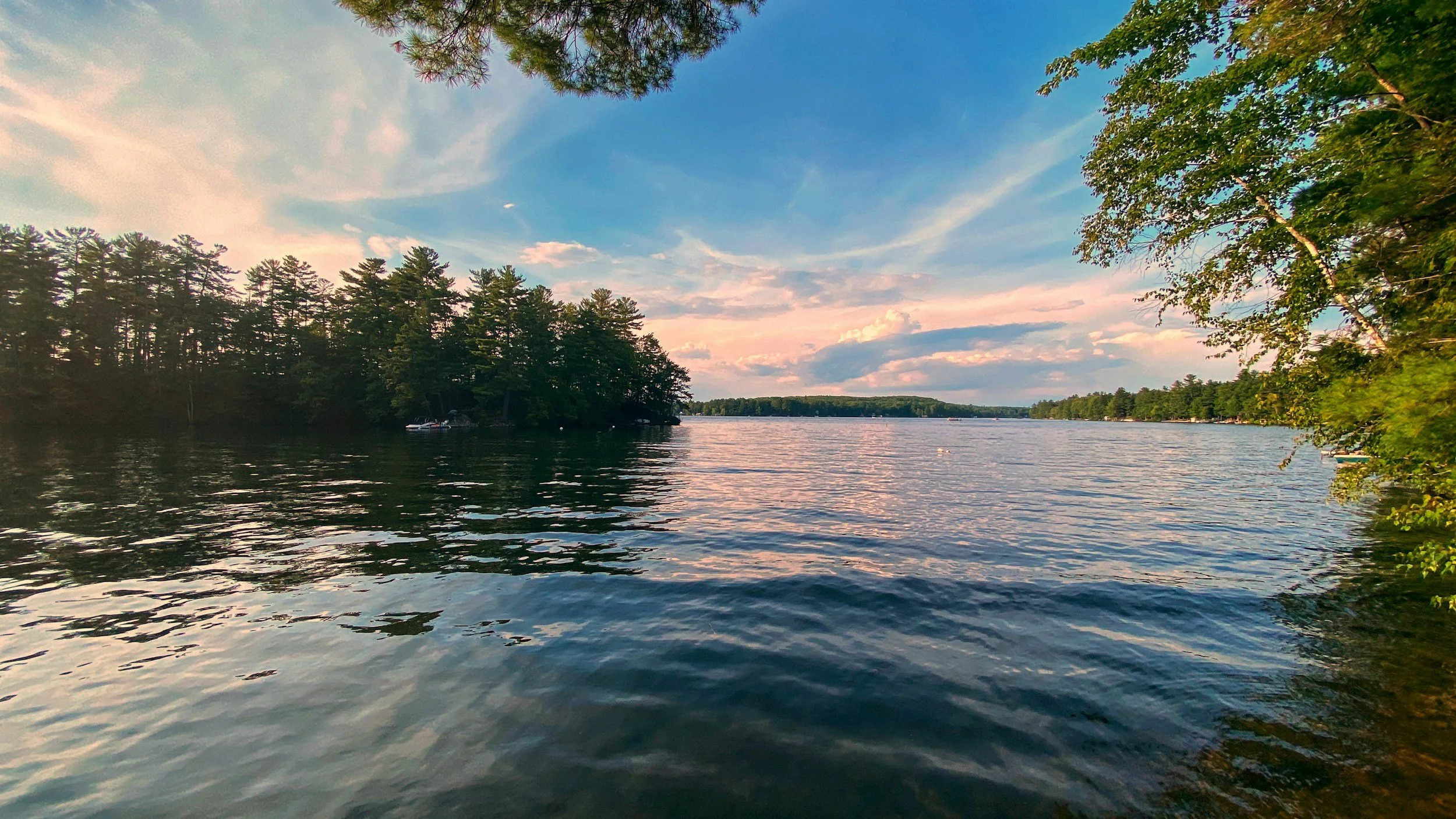
There are days on the job that stop you in your tracks.
Crystal blue skies. Fresh snow underfoot. A frozen lake stretching out in front of you. Mountains rising in the distance. And one of our crew members high in a pine, carefully working above it all.
Tree work is demanding, technical, and often physically exhausting, but sometimes, the setting reminds us how lucky we are to do what we do. Maine’s shorelines are some of the most beautiful places in the state, and working along them is both a privilege and a responsibility.
Because shoreline tree work isn’t just about removing trees. It’s about protecting the land and the water that make these properties so special.
Understanding Maine’s Shoreland Zoning Rules
In Maine, most lakes, ponds, rivers, and coastal areas fall under the state’s shoreland zoning regulations. These rules apply within 250 feet of the normal high-water line and are designed to protect water quality, wildlife habitat, and shoreline stability.
If you own waterfront property, it’s important to understand that you typically cannot clear trees freely within this zone.
Local municipalities administer shoreland zoning rules, and requirements can vary slightly by town — but the environmental goals remain the same: prevent erosion, reduce runoff, and preserve the health of Maine’s waters.
The 250-Foot Shoreland Zone
Within this regulated area:
Clear-cutting is not allowed.
Tree removal is often limited.
Permits may be required depending on the scope of work.
Vegetation must be maintained to protect soil and water quality.
Many towns use a point system that determines how much vegetation can be removed while still maintaining adequate canopy cover and root structure.
Before beginning any shoreline project, we strongly recommend checking with your local code enforcement office — or working with a licensed professional who understands the process.
Hazard Trees and Selective Removal
While regulations exist, property owners are still allowed to address legitimate concerns.
Hazard trees — those that are dead, structurally compromised, leaning dangerously, or posing a threat to structures — can often be removed. However, documentation or approval may be required.
The key is selective, responsible removal rather than large-scale clearing.
In shoreline environments especially, maintaining canopy cover and root systems helps:
Stabilize soil and prevent erosion
Filter runoff before it reaches the water
Provide shade that regulates water temperature
Support wildlife habitat
Removing too much vegetation can lead to long-term environmental damage and costly remediation.
Low-Impact Techniques Matter
One of the biggest considerations in shoreline tree work is minimizing ground disturbance.
Heavy equipment near the water can damage root systems, compact soil, and increase runoff. In many cases, careful climbing and rigging are the best way to safely remove trees while protecting the shoreline.
We also pay close attention to:
Avoiding damage to septic and leach fields
Preserving surrounding vegetation
Protecting exposed soils in winter conditions
Maintaining compliance with local regulations
Every shoreline job requires a thoughtful plan — not just chainsaws and horsepower.
Preserving Maine’s Lakes for the Future
The trees along Maine’s lakes and rivers do more than frame a beautiful view. They are essential to the health of the ecosystem.
They hold the shoreline in place. They filter nutrients and sediment. They provide habitat and shade.
When done properly, shoreline tree work improves safety while maintaining the long-term integrity of the land and water.
Work With Professionals Who Know the Rules
If you’re considering shoreline tree removal, the most important step is making sure it’s done correctly, legally, safely, and responsibly.
Working in these areas requires knowledge of Maine’s regulations, an understanding of environmental impact, and the technical skill to execute the job with minimal disturbance.
The views may be incredible, but the responsibility is just as real.
And when it’s done right, you can protect both your property and the beauty that makes Maine’s shorelines worth preserving.